Which Information to Check First Before Investing: Financial Statements, Disclosures, or News
Understanding the Role of Each Information Source
When you begin evaluating a potential investment, three broad categories of information demand your attention: financial statements, corporate disclosures, and news. Each serves a distinct purpose and answers a different question about the company. Financial statements tell you what has already happened in measurable terms. Disclosures reveal what the company is legally required to share about risks, operations, and future plans. News provides context, sentiment, and real – time developments that may not yet appear in official filings. The mistake many investors make is treating these three sources as interchangeable or relying on only one. To build a sound investment thesis, understanding what each source can and can’t tell you, and in what order to consult them, tends to matter more than people initially assume. (This is general research methodology, not personalized financial advice – how you weigh these sources should still reflect your own situation and, ideally, a conversation with a qualified financial advisor for anything consequential.)
Why Financial Statements Should Be Your Starting Point
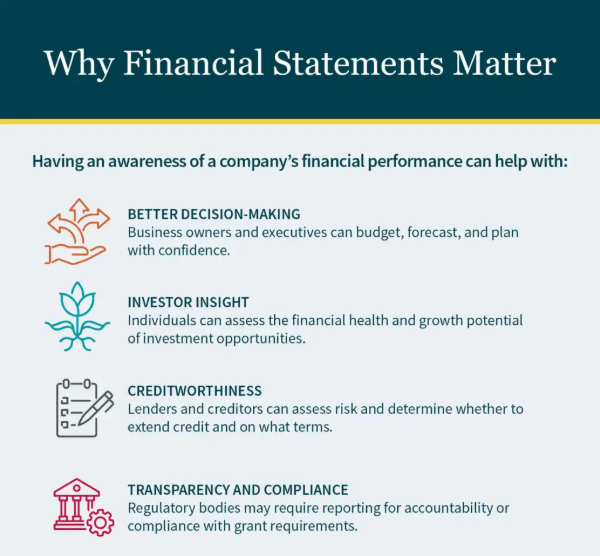
Financial statements are generally the most reliable foundation for investment analysis because they’re standardized, audited, and backward-looking. The income statement shows revenue, expenses, and profitability over a specific period. The balance sheet reveals what the company owns, owes, and the equity held by shareholders. The cash flow statement tracks how money actually moves in and out of the business, which is often more telling than net income alone, since net income can include non-cash accounting items that cash flow strips back out. Before reading a single news article or disclosure, having a clear picture of the company’s revenue trends, profit margins, debt levels, and operating cash flow is worth establishing first. For example, a company consistently reporting rising revenue but declining cash flow from operations is a red flag that news headlines may not highlight at all. Financial statements give you a baseline; without it, judging whether a news event or disclosure item is significant or trivial becomes considerably harder.
It’s worth knowing that “standardized” doesn’t mean identical everywhere – companies generally report under one of two major accounting frameworks, US GAAP or IFRS (used across the EU, UK, and much of the rest of the world), and while these are broadly similar, they differ in some specific treatments (revenue recognition timing and certain asset valuations, among others). When comparing companies across different countries, checking which framework a given company reports under is worth doing before assuming the numbers are directly comparable line for line.
What Corporate Disclosures Add That Statements Do Not
Corporate disclosures fill the gap between what has already happened and what might happen next. In most regulated markets, companies must file periodic reports that include management discussion and analysis, risk factors, legal proceedings, and forward-looking statements. These documents often contain information that never appears in the quarterly financial summary. For instance, a company may report strong earnings on its income statement but disclose in the management discussion that a key customer contract is expiring, or that a regulatory investigation has begun. Disclosures also include footnotes to the financial statements, which can reveal accounting policies, contingent liabilities, and related-party transactions that materially affect the headline numbers. Reading the full disclosure document, not just the press release summarizing it, is generally worth the extra time – many investors skip this step and later discover that a risk factor or footnote buried in it contained exactly the warning they missed.
It’s worth knowing that “quarterly” reporting itself isn’t a universal requirement, which matters for how you sequence this research depending on where a company is listed. The EU dropped its mandatory quarterly reporting requirement back in 2013 (many companies still report quarterly voluntarily, but it’s no longer required), and the US SEC has itself been exploring a shift toward semiannual reporting in recent years, with full implementation potentially years out and the outcome still evolving as of this writing. In practice, this means the specific reporting cadence and disclosure format you should expect can vary meaningfully depending on where a company is listed, and it’s worth checking that market’s current requirements directly rather than assuming a fixed quarterly rhythm applies everywhere.
The Role of News and When It Becomes Relevant
News is the most accessible information source but also the most dangerous to rely on without context. Stock prices often react to news within minutes, and the emotional response to a headline can lead to impulsive decisions. News tends to be most useful once you already understand a company’s financial position and risks. A negative story about a temporary supply chain disruption matters less for a company with strong cash reserves and diversified suppliers than for a highly leveraged company dependent on a single factory. Similarly, positive news about a new product launch is only meaningful if the company has the financial capacity to scale production and market it effectively. News is generally best used to update an existing analysis, not replace it – reading news first risks anchoring on a single event while ignoring the broader financial reality underneath it.
How to Sequence Your Research for Maximum Clarity

A reasonable general sequence is starting with the most recent annual financial statements, moving to the latest available periodic report and its disclosures, and finally reading recent news with the context already built. This order can help avoid being swayed by market noise before understanding the fundamentals. A practical starting point is checking revenue growth, gross margin, operating margin, net income, and free cash flow over the last three to five years, then reviewing the balance sheet for debt-to-equity ratio, current ratio, and any significant changes in goodwill or intangible assets. After that, reading the management discussion and risk factors in the most recent disclosure filing is worth doing before turning to recent news articles, analyst reports, or industry commentary. This approach means that when you do encounter a news headline, you’re generally better positioned to judge whether it confirms or contradicts what the financial statements and disclosures already told you.
Common Traps When Relying on Only One Source

Investors who rely exclusively on financial statements tend to miss forward-looking risks and qualitative factors that disclosures capture. Those who read only disclosures may understand risks but lack the quantitative context to judge their real severity. News-only investors tend to be the most vulnerable to hype, panic, and short-term noise – a company with deteriorating fundamentals can still generate positive news coverage for months, while a fundamentally sound company can suffer temporary bad press that creates what turns out to be a buying opportunity in hindsight. Another common trap is assuming all information in news is accurate or complete; outlets may report earnings beats or misses without explaining one-time items, accounting changes, or non-recurring gains that distort the underlying picture. Cross-referencing news against financial statements and disclosures is generally how genuine developments get separated from noise. The goal isn’t finding one perfect source, but building a layered understanding that no single document provides on its own.
FAQ
Question: Should I read the full annual report, or just the financial statements? Answer: Reading at least the financial statements, the footnotes, and the management discussion section of the annual report is generally worthwhile. The footnotes often contain critical details about revenue recognition, debt terms, and contingent liabilities that don’t appear in the main statements themselves. The management discussion provides context for the numbers, including explanations of trends, risks, and strategic decisions. Skipping these sections can leave a meaningfully incomplete picture of a company’s financial health.
Question: How do I know if a news article is reliable enough to act on? Answer: Cross-checking an article’s claims against the company’s official filings and disclosures before making any decision is a reasonable habit. Reliable coverage typically cites specific documents, events, or official statements. If a claim can’t be verified anywhere in the company’s own filings, treating it with real caution is warranted. It’s also worth considering the outlet’s general track record and whether the piece includes direct quotes, document references, or named analysts, rather than acting on unverified news, which often leads to buying near peaks or selling near bottoms.
Question: What if I find conflicting information between the financial statements and the news? Answer: Prioritizing the financial statements and official disclosures over general news coverage is generally the safer default, since statements are audited and follow standardized accounting rules, while news may rely on estimates, rumors, or incomplete data. If an article reports a different revenue or profit figure than the financial statements show, checking whether it’s referring to adjusted or non-GAAP numbers, or citing analyst estimates rather than reported results, is worth doing before assuming a real discrepancy. When genuinely in doubt, going back to the original filing and comparing directly tends to resolve the confusion.